

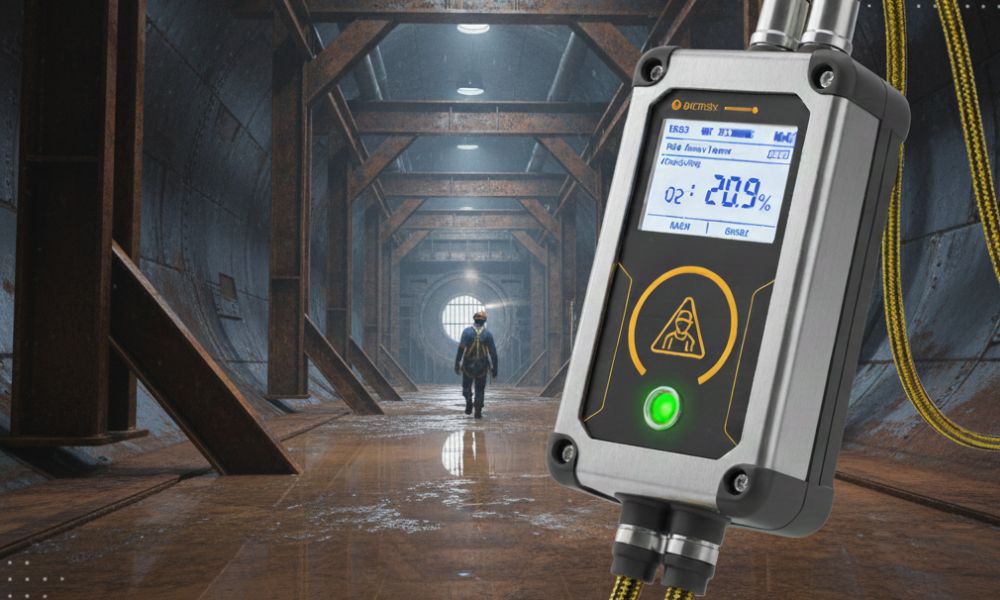
Confined spaces present some of the most dangerous working conditions in industrial environments. The biggest threat is often not toxic gas exposure, but oxygen deficiency. Even a slight drop in oxygen concentration can impair judgment, reduce coordination, or cause unconsciousness. This makes oxygen detectors essential tools for anyone entering tanks, pits, tunnels, or underground chambers.
Oxygen depletion can occur due to several factors. Rusting, biological activity, chemical reactions, or displacement by inert gases can all lower the oxygen level without warning. Workers cannot rely on smell or appearance to detect these changes; only continuous monitoring provides the necessary protection. Modern oxygen detectors use electrochemical sensors that respond quickly and provide accurate readings across a wide range.
These detectors are often paired with portable multi-gas monitors to ensure comprehensive safety. Pre-entry checks, followed by continuous monitoring as workers move through the space, are considered best practice. Oxygen enrichment, though less common, can also occur and increases the risk of fire.
Confined space incidents are often sudden and severe, making reliable oxygen detection indispensable. With proper equipment and training, workers can enter and work safely, knowing they are protected from one of the most silent but deadly industrial hazards.