

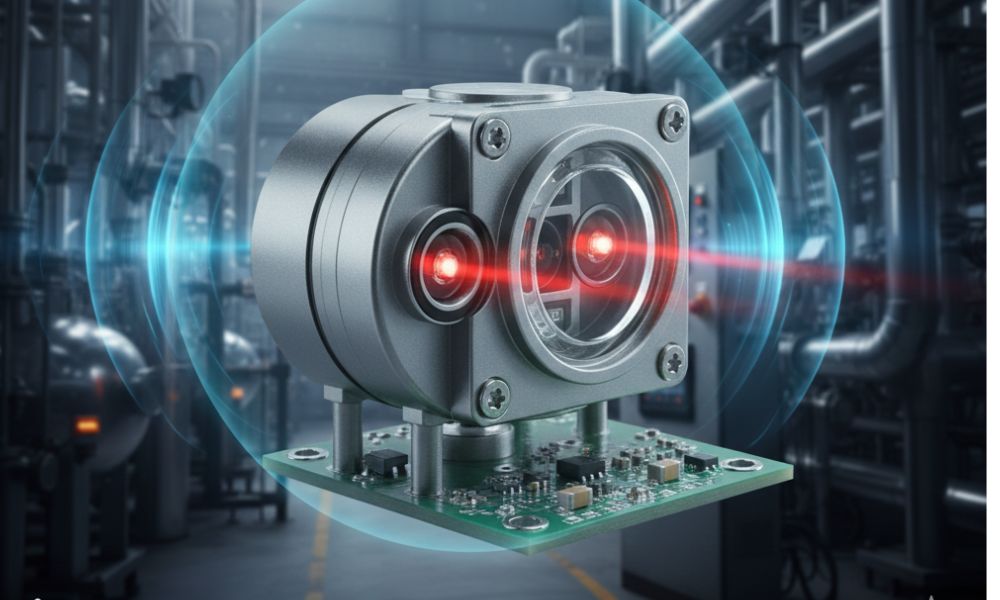
Infrared gas detection has become increasingly popular due to its stability, accuracy, and low maintenance requirements. Unlike catalytic sensors, infrared detectors do not rely on chemical reactions. Instead, they measure how much infrared light is absorbed by a gas at specific wavelengths. Each gas absorbs IR radiation differently, allowing the sensor to identify and measure gas concentration with high selectivity.
One reason infrared detection is so reliable is its immunity to sensor poisoning. Chemicals that might damage catalytic elements have no effect on IR optics. This makes infrared detectors ideal for applications with silicone vapors, corrosive environments, or areas where contamination is common. They also perform well in oxygen-deficient spaces because the measurement does not require combustion or oxidation.
Another advantage is long-term stability. Infrared sensors drift slowly, which reduces the frequency of calibration. They also respond quickly, often within seconds, which is critical in high-risk areas such as refineries or gas turbine enclosures.
While IR sensors are more expensive upfront, they typically pay for themselves through reduced maintenance and longer service life. Industries that prioritize uptime, accuracy, and reliability increasingly choose infrared detection as their primary technology. Its ability to deliver consistent readings with minimal intervention makes it one of the most dependable solutions available today.