

The Role of Oxygen Detectors in Confined Space Safety
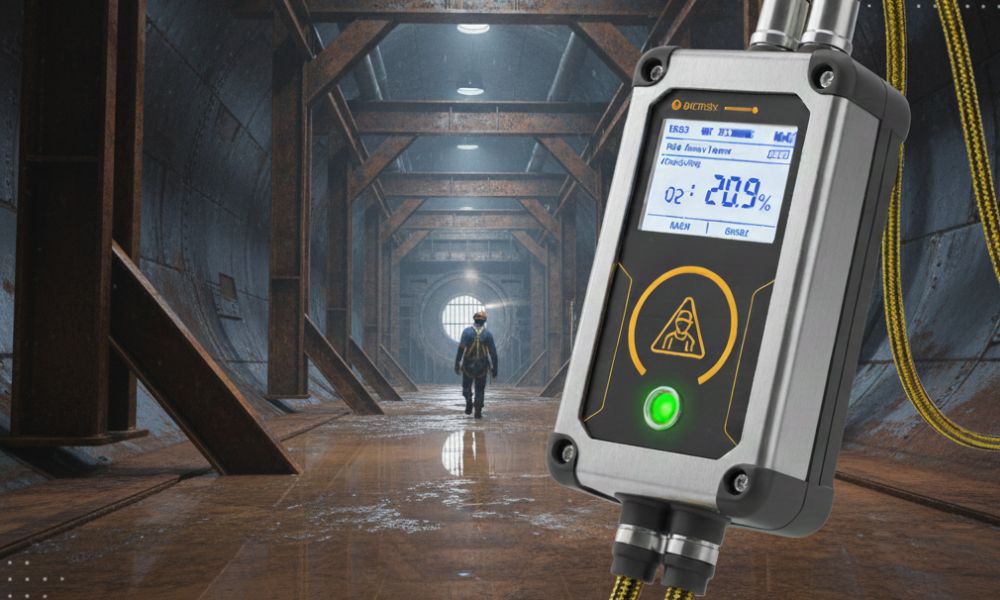
Confined spaces present some of the most dangerous working conditions in industrial environments. The biggest threat is often not toxic gas exposure, but oxygen deficiency. Even a slight drop in oxygen concentration can impair judgment, reduce coordination, or cause unconsciousness. This makes oxygen detectors essential tools for anyone entering tanks, pits, tunnels, or underground chambers. […]
What Makes Infrared (NDIR) Gas Detection So Reliable?

Infrared gas detection has become increasingly popular due to its stability, accuracy, and low maintenance requirements. Unlike catalytic sensors, infrared detectors do not rely on chemical reactions. Instead, they measure how much infrared light is absorbed by a gas at specific wavelengths. Each gas absorbs IR radiation differently, allowing the sensor to identify and measure […]
Understanding the Basics of Catalytic Bead Gas Sensors

Catalytic bead sensors are one of the oldest and most trusted technologies for detecting flammable gases. Despite the emergence of infrared detection, catalytic sensors remain widely used because of their reliability and affordability. The basic principle behind these sensors is simple: when a flammable gas comes into contact with a heated catalytic element, it oxidizes […]
Why Gas Detection Is the First Layer of Industrial Safety

In every industrial environment where chemicals, hydrocarbons, or process gases are used, the potential for leaks is always present. Gas detection is the earliest warning system, providing the crucial few seconds or minutes needed to avoid major incidents. What makes gas detection the first layer of safety is its ability to identify invisible and odorless […]